
We all have
that one friend who makes decisions in a split second based on a
"vibe." We have another who needs to see the data, the spreadsheets,
and the five-year plan before committing to lunch. And then there's the one who
subtly checks the room's temperature, ensuring everyone feels included before
making a move.
In the world
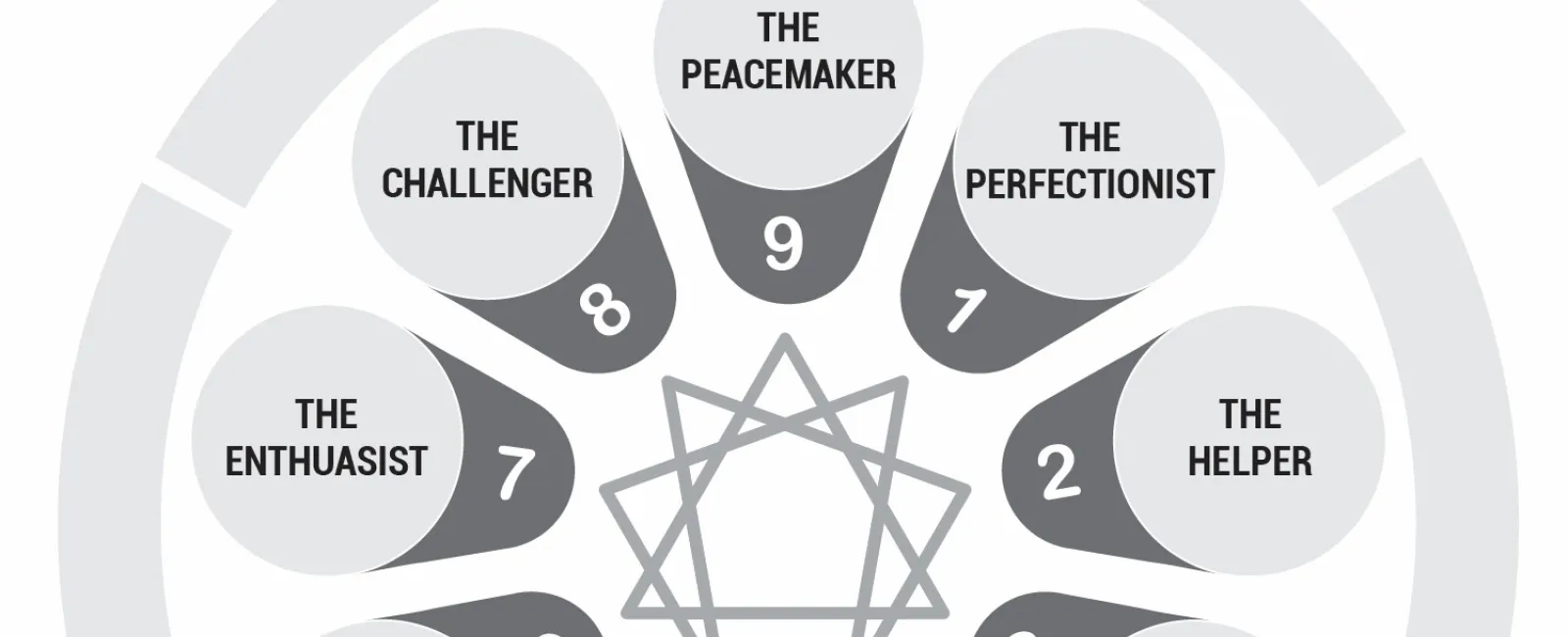
of the Enneagram, these aren't just personality quirks; they are the Three Intelligence Centers. Every
human possesses a "Gut," "Heart," and "Head," but
we each have a primary "home base" that filters our reality.
Understanding your center is like finding the operating system for your soul.
The Gut Triad: The Power of Instinct (Types 8, 9, 1)
The Gut Triad, comprising Types 8 (The Challenger), 9 (The Peacemaker), and 1
(The Reformer), is driven by instinct.
If you belong to this group, your first reaction to the world is visceral. You
feel life in your body before you process it in your mind.
Navigating
Anger and Autonomy
The core
theme for the Gut Triad is Anger,
though each type wears it differently. This triad is fundamentally concerned
with maintaining its autonomy and resisting outside influence.
· Type 8s externalize
anger. They use it as fuel to assert control and protect themselves and others.
· Type 9s internalize
or "sleep on" anger. They prioritize harmony, often numbing their own
desires to avoid conflict.
· Type 1s repress
anger. They transform it into "resentment" or a drive for perfection,
believing that if they are "good" enough, they can justify their
presence.
For the Gut
Triad, the world is a place to be resisted or reformed. Their
"knowing" is a steady, grounded internal compass that says, "This
is right," or "Get out of my way."
The Heart Triad: The Pursuit of Connection (Types 2, 3, 4)
If the Gut
Triad is about "doing," the Heart Triad is about being. Types 2 (The Helper), 3 (The
Achiever), and 4 (The Individualist) navigate the world through the lens of
emotion and social standing.
Image,
Feeling, and Significance
The driving
force here is Shame. Those in
the Heart Triad are hyper-aware of how they are perceived by others. Their
central question is: "Who do I need to be to be loved?"
· Type 2s focus on
being likable and indispensable. They meet others' needs to ensure they remain
connected.
· Type 3s focus on
being successful and admired. They often lose touch with their true feelings in
favor of an efficient, high-performing "persona."
· Type 4s focus on
being unique and authentic. They lean into their feelings to find a sense of
significance, often feeling like something essential is missing.
For this
triad, life is filtered through the heart. They are the masters of
"reading the room," but their challenge is finding their own worth
independent of the mirrors held up by society.
The Head Triad: The Quest for Security (Types 5, 6, 7)
Finally, we
have the Head Triad: Types 5 (The Investigator), 6 (The Loyalist), and 7 (The
Enthusiast). For these individuals, the world is a puzzle to be solved or a map
to be charted.
Managing
Anxiety through Information
The
underlying emotion for the Head Triad is Fear (often experienced as anxiety). To cope with an unpredictable
world, they retreat into their minds to find strategies, data, or distractions.
· Type 5s seek
security through knowledge. They minimize their needs and gather information so
they won't be caught off guard or overwhelmed.
· Type 6s seek
security through support and troubleshooting. They are the "worst-case
scenario" planners, looking for authority or systems they can trust.
· Type 7s seek
security through options and excitement. They avoid anxiety by constantly
planning the next big thing, ensuring they never have to sit with pain or
boredom.
The Head
Triad lives in the future. They are the architects and the visionaries, but
their growth lies in coming down from the "observation tower" and
actually inhabiting their bodies in the present moment.
Practical
Tip: Identifying Your Center at Work
Not sure
which center you lead with? Your professional life is the perfect laboratory
for self-observation. During your next typical workday, pay close attention to
your first reaction when an
unexpected problem arises (like a missed deadline or a harsh email).
Ask yourself:
Where does the "hit" land first?
1.
Is it in your Body? (Gut)
o
Do you feel a sudden surge of heat, a tightening in your jaw, or
an immediate urge to fix it or push back? If your first thought is
"This isn't right" or "I'll handle this myself," you likely
lead with your Gut.
2.
Is it in your Heart? (Heart)
o
Do you immediately wonder how this affects your reputation? Do you
worry if the sender is mad at you, or if you've let the team down? If your
first instinct is to manage the "vibe" or your image, you lead with
your Heart.
3.
Is it in your Head? (Head)
o
Do you instantly start analyzing the "why"? Do you look
for the data, start a mental checklist of solutions, or imagine the worst-case
fallout? If your brain goes into hyperdrive while your body stays still, you
lead with your Head.
Balancing the Centers:
Finding your
emotional center is not about boxing yourself in; it is about understanding
your default settings so you can eventually access the other two. The goal of
the Enneagram is Integration.
The person
who can use their Gut to act,
their Heart to empathize with
the team, and their Head to plan
the strategy is the person who moves through the world with true emotional
intelligence.
Which center
felt like "home" to you today?