
One of the
most common misconceptions about personality frameworks is that they are
"boxes", static categories that label who we are and leave us there.
But the human experience is far more fluid than a single number on a chart. We
are not statues; we are ecosystems. We expand when we feel safe and contract
when we feel threatened.
In the
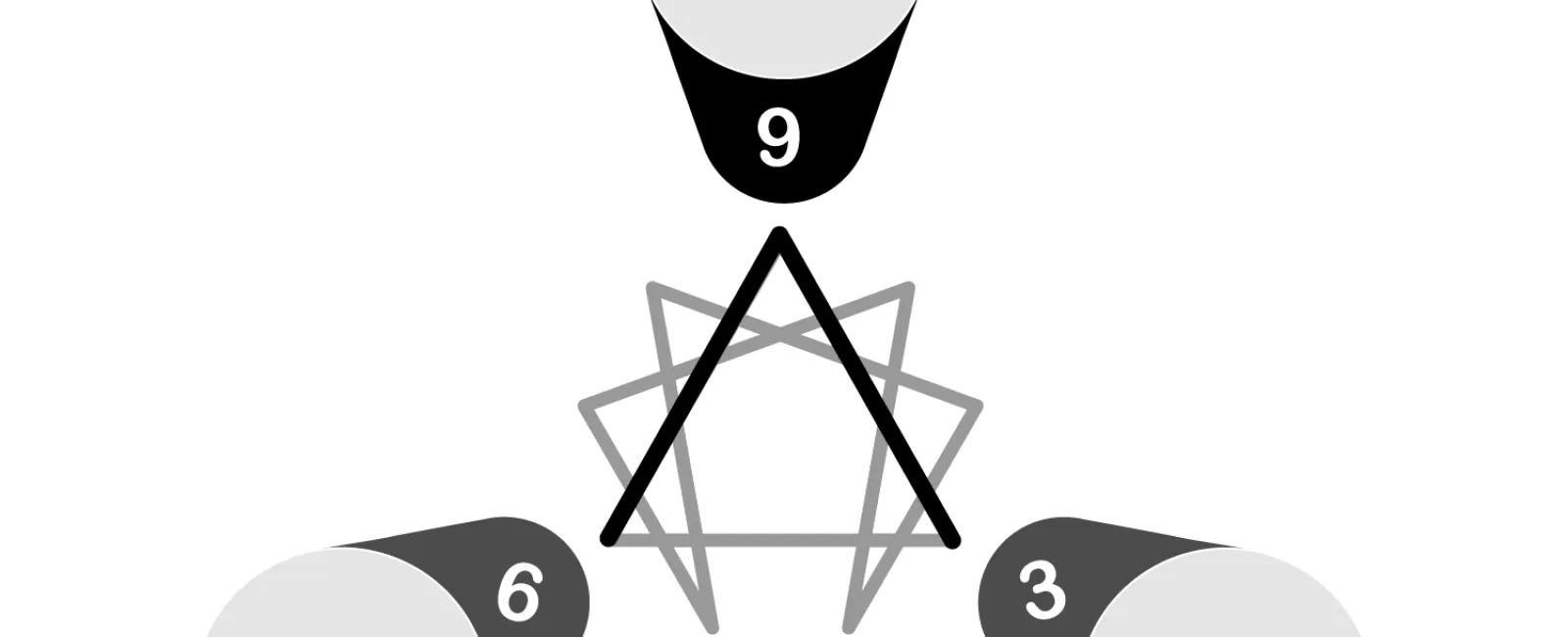
Enneagram system, this fluidity is illustrated by the lines and arrows that connect the nine types. These aren't just
decorative; they represent the "Lattice" of human movement.
Understanding these paths is the difference between being a victim of your
personality and being the pilot of it.
The Concept of the Lattice: Personality in Motion
Imagine your
primary Enneagram type as your "home base." It is where you feel most
comfortable, but it is not the only place you travel. The Enneagram symbol is a
dynamic map showing that under different life conditions, specifically Stress and Growth, we "shift" into the behaviors of other types.
This movement
explains why a usually quiet and withdrawn person might suddenly become
talkative and assertive, or why a natural leader might suddenly become
indecisive. We are constantly sliding along these internal ley lines based on
our environment, our energy levels, and our perceived level of psychological
safety.
The Stress Path: The "Direction of Disintegration"
When we are
overwhelmed, exhausted, or pushed past our coping limits, we move along our Stress Arrow. This is often called the
"Direction of Disintegration." In this state, we do not become
a new type; rather, we begin to adopt the less effective, "low-side"
traits of another type as a desperate survival strategy.
Consider
these common shifts in the Stress Path:
· The Seven
(The Enthusiast) moves to One (The Reformer): Usually spontaneous and
fun-loving, a stressed Seven becomes uncharacteristically rigid, critical, and
judgmental of others.
· The Two (The
Helper) moves to Eight (The Challenger): Usually warm and selfless, an
overwhelmed Two may become surprisingly blunt, aggressive, and demanding when
they feel unappreciated.
· The Nine (The
Peacemaker) moves to Six (The Loyalist): The easy-going Nine begins to
experience uncharacteristic anxiety, overthinking, and a "worst-case
scenario" mindset.
The Stress
Path is the psyche's "emergency brake." It is an attempt to solve a
problem using a toolkit we are not used to wielding. While it can be
destructive, it serves a vital purpose: it is a loud, flashing red light
telling us that our current way of living is unsustainable.
The Growth Path: The "Direction of Integration"
Conversely,
when we feel secure and are consciously working toward self-actualization, we
move along our Growth Arrow (the
"Direction of Integration"). This is an intentional movement. Unlike
the Stress Path, which happens to us automatically, the Growth Path usually
requires a "conscious lean."
We begin to
inhabit the high-side, healthy traits of our growth type to balance out our own
ego's blind spots:
· The Three
(The Achiever) moves to Six: The competitive, image-conscious Three begins to value loyalty,
community, and the well-being of the group over personal accolades.
· The One (The
Reformer) moves to Seven: The rigid, self-critical One learns to embrace spontaneity, joy,
and the realization that the world won't fall apart if they relax.
· The Five (The
Investigator) moves to Eight: The detached, cerebral Five moves out of their head and into
their body, gaining the confidence to take physical action and lead others.
Integration
is not about "fixing" yourself; it is about wholeness. It is about a Type Five realizing they do not just need
more information, they need the courage to use it.
Recognizing Your "Stress Signals" Before Burnout
The most
practical application of the Enneagram arrows is using them as an early-warning
system. Most of us don't realize we are headed for burnout until we are already
there. However, our "Stress Arrow" behavior usually shows up long
before the total collapse.
If you are a Type Four and you find yourself
becoming uncharacteristically clingy or over-involved in others' business
(moving toward the low side of Type Two), that is a signal. You aren't
"becoming a bad person"; you are reaching the end of your emotional
tether.
Call to
Action: Audit Your Movement
Take a moment
to look at your primary type's stress point. Ask yourself:
1.
What behaviors do I exhibit when I'm "not myself"?
2.
Who is the "Type" I move toward when I feel cornered?
By naming
these behaviors, "Oh, there's my stressed Six coming out", you create
a gap between the impulse and the action. You can then choose to pivot toward
your growth arrow. Instead of spiraling, you can intentionally seek the traits
that bring you back into balance.
Self-awareness
is the ability to catch yourself in the act of being yourself. Use your arrows
to navigate back to the center before the stress takes the wheel.